


Not every garage door problem means the spring has failed, even when the door turns heavy or starts stopping mid-cycle. In Savannah, GA, these symptoms can also point to track resistance, cable issues, or a strained opener, so identifying the true cause matters.
This guide explains how to confirm whether your garage door spring is broken by looking for clear, easy-to-spot warning signs and observing system behavior. It also explains when garage door spring repair is needed so you can protect the garage door system, reduce safety risks, and avoid further damage.
How Dangerous Is It to Keep Using a Broken Garage Door Spring?
Using a door after a spring failure can overload the system, shift load to parts not designed to carry it, and increase safety risks because the counterbalance support is no longer stable.
Common problems that can show up when spring support is lost include:
- Sudden balance changes can make door travel unstable and harder to control.
- Extra strain on the garage door opener can cause it to stop, reverse, or overheat.
- Uneven cable tension can lead to crooked travel and faster wear on drums and bearings.
- Faster closing or drop behavior can increase the risk of property damage and serious injury.
- Continued operation can cause further damage across connected hardware and increase service needs.
To understand why continued use can be unsafe around Savannah, read our guide on How Dangerous Is a Broken Garage Door Spring in Savannah, GA?, as it explains the main risk factors and when the door needs immediate attention.
Key Signs of a Broken Garage Door Spring
Spring failure usually manifests as changes in door balance, lift power, and travel behavior that make the system feel heavier and less controlled.
Common warning signs that often indicate a broken garage door spring include:
- Hearing a loud bang, followed by lifting problems, or a door that will not open normally.
- Noticing movement that starts, stalls, or reverses because the lift support has dropped.
- Feeling sudden heaviness that signals counterbalance loss and increased strain.
- Watching the opener run while the door barely moves or stays closed.
- Seeing the door drop faster than normal or refuse to stay open.
- Spotting uneven travel where one side rises higher due to uneven tension.
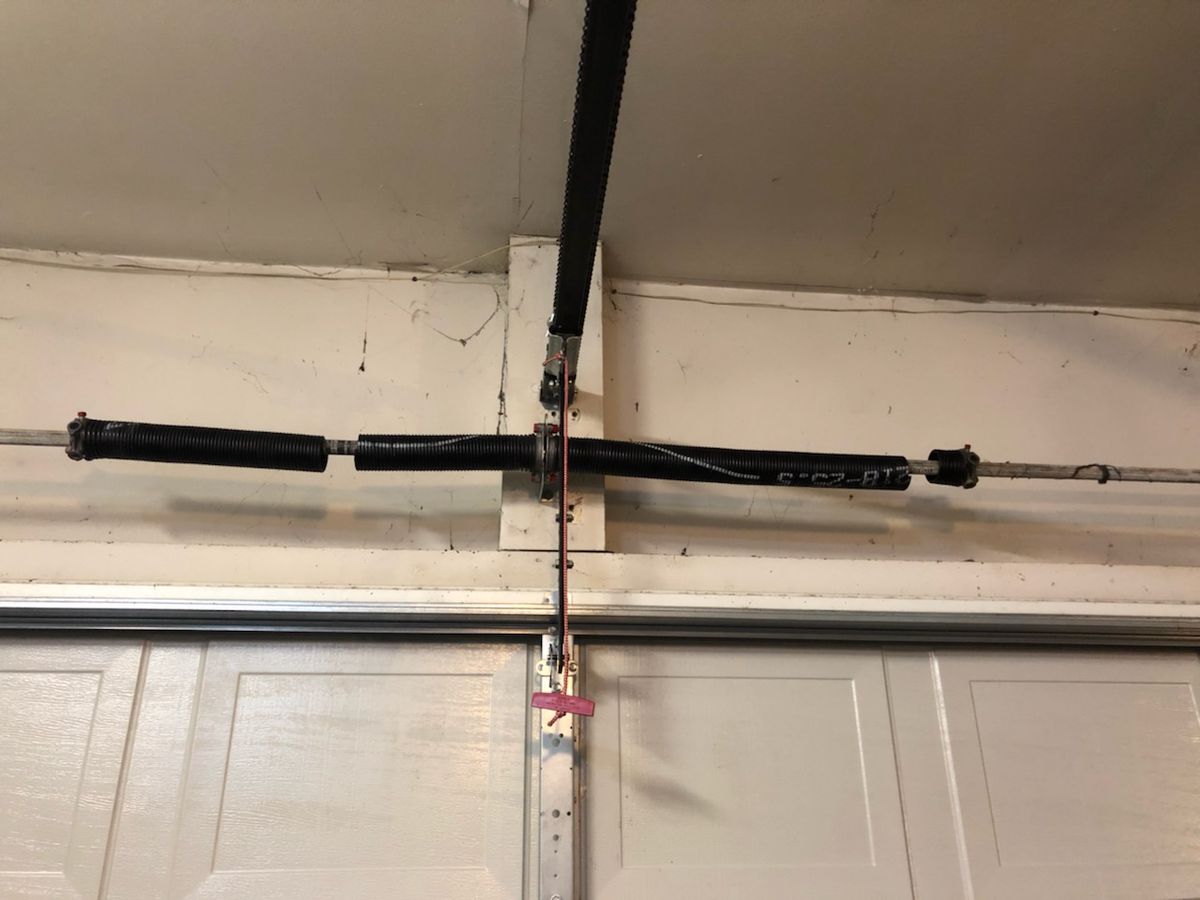
- Finding a visible gap in the torsion spring coil above the door.
For more warning signs and safety mistakes to avoid, read our blog on Signs of a Broken Garage Door Spring (And What Not to Do), which explains what these symptoms mean and what actions can make the damage worse.
How to Know If a Broken Garage Door Spring Is the Problem
Step 1: Pinpoint When the Problem Started
Noting whether the issue began suddenly or built up over days helps Savannah homeowners separate spring failure from gradual wear, resistance, or control glitches.
Key details to lock in include:
- Recalling whether a loud bang happened right before the door started acting differently
- Noting whether the operation was normal earlier the same day
- Identifying whether the door began stopping mid-cycle without warning
- Remembering whether heavy use, heat, or humidity hit around the same time
- Checking whether the change started after one specific open-close cycle
The Federal Register explains that residential garage door operators must respond to unexpected resistance and unsafe movement, so a sudden change after a loud bang should be treated as a serious mechanical event.
Step 2: Observe Movement Patterns During Open and Close Cycles
Comparing how the door behaves in both directions helps confirm imbalance patterns that tend to appear after spring support is removed.
Useful movement patterns to watch include:
- Seeing whether the door rises only a few inches, then stops
- Watching whether the closing speed increases compared to normal
- Noting whether the door reverses early as resistance increases
- Listening for strain sounds during lift versus during closing
- Checking whether the stop point repeats at the same spot each time
Movement that stalls, reverses, or drops unevenly often points to a balance or resistance issue that should be checked through garage door maintenance to reduce strain and limit further damage.
Step 3: Confirm Weight and Balance Signals
Weight and balance changes often appear quickly after spring failure, and these signals help confirm that the door is no longer supported as it should be.
Strong confirmation cues include:
- Feeling unusually heavy movement compared to normal operation
- Hearing the opener sound strained because the load increased
- Watching jerky travel that was not present before the problem started
- Noticing uneven lift where one side rises higher than the other
- Seeing the door struggle most around mid-travel, where balance matters
Heavy feel and poor balance are common signs of a broken garage door spring, especially when the change occurs overnight.
Step 4: Review Visual Clues Near Springs and Cables
A no-touch inspection can reveal clear mechanical failure signs, and caution is warranted because spring hardware is under high tension and can pose safety risks.
Focus on confirmation details such as:
- Spotting a visible gap in a torsion spring coil above the door
- Noticing slack or loose cables near the drums at the top corners
- Seeing an uneven cable wrap that looks different from one side to the other
- Observing a slightly crooked door position during partial opening
- Catching a new misalignment that appeared right after the symptoms started
Coil separation and cable slack are direct warning signals that a broken garage door spring may be affecting lift balance and safe door travel.
Step 5: Note How the Opener Reacts Under Load
Changes in motor behavior often occur after spring support drops, because the system is no longer moving a balanced door, and resistance rises rapidly.
Load-related reactions that often point to spring failure include:
- Hearing the motor run while the door barely lifts off the floor
- Seeing flashing lights after a failed open or close attempt
- Noticing stop-and-reverse behavior as resistance spikes during travel
- Watching a normal start turn into a quick shutdown under strain
- Observing intermittent lift that fails again as the load increases
InterNACHI explains that garage doors are spring-supported systems and that defective components can create safety hazards and functional deficiencies, which aligns with treating overload reactions as warning signals rather than normal behavior.
Step 6: Rule Out Look-Alike Issues Before Scheduling Service
Ruling out common look-alikes helps ensure the right service is scheduled and avoids chasing the wrong cause after symptoms appear.
Look-alike issues worth considering include:
- Sensor alignment or obstructions causing reversals near the floor
- Track debris or roller drag, creating resistance that mimics heaviness
- Travel limits stop the door from opening early at the same point every time
- Lock mode blocks remote commands even when the system has power
- Wall control issues are creating inconsistent responses between controls
Eliminating sensor, track, and control issues first helps narrow the diagnosis and strengthens the likelihood that a broken garage door spring is the true cause of the abnormal door behavior.

What Causes a Broken Garage Door Spring in Savannah, GA?
Spring failure in Savannah often comes from cycle fatigue, moisture exposure, and setup factors that increase strain on the garage door system over time.
Common causes that can lead to a broken garage door spring include:
- Frequent daily use that pushes the spring past its rated number of cycles.
- Normal wear that builds over years of opening and closing, especially on heavier doors.
- High humidity that speeds corrosion and weakens spring steel under load.
- Rust buildup that increases friction and accelerates fatigue at stress points.
- Incorrect spring sizing for the type of garage door and the door’s weight, increasing strain every cycle.
- Prior service issues that leave the system out of balance and load unevenly.
- Aging hardware that adds resistance and increases counterbalance strain.
Humidity-driven corrosion, cycle fatigue, and sizing issues are explained in our blog on What Causes a Broken Garage Door Spring in Savannah?, which breaks down how each factor weakens springs over time.
Problems That Can Look Like a Broken Spring
Several issues can mimic the feel of a broken spring by changing door resistance, travel behavior, or control response, even when the spring is still intact.
Common problems that can resemble a broken garage door spring include:
- Photo eye sensors blocked or misaligned, causing reversals near the floor during closing attempts.
- Track debris, bent track sections, or roller drag that adds resistance and makes movement feel heavier.
- Travel limits or force settings that stop the door early at the same point in the cycle.
- Lock mode is enabled on the wall control, preventing the door from operating normally with remotes.
- A strained garage door opener motor that runs but cannot move the door consistently under load.
- Loose hardware or worn rollers that create jerky movement and vibration during travel.
- Misaligned cables or drum issues that create crooked travel without a spring break.
If the door still behaves unpredictably after look-alike issues are ruled out, and emergency garage door service helps address unstable travel, sudden drops, or repeat reversals before the problem escalates.
How Professionals Confirm a Spring Problem
Professional diagnosis focuses on door balance, condition of the lift hardware, and safety checks to confirm whether spring failure is causing the abnormal movement and resistance.
Key checks professionals use to confirm a broken garage door spring include:
- Measuring lift balance behavior to see whether the counterbalance is carrying the load correctly.
- Inspecting the spring condition for visible separation, deformation, rust, or other signs of fatigue.
- Checking cable tension, drum alignment, and wrap consistency to confirm even lift support on both sides.
- Evaluating bearings, rollers, and track condition to rule out resistance that can mimic spring failure.
- Reviewing opener strain patterns, stop-and-reverse behavior, and load response to confirm imbalance impact.
- Inspecting brackets and attachment points to ensure no shifting or damage occurred during failure.
- Verifying safe door travel and controlled movement to reduce the chance of sudden drops or unstable closing.
After inspection confirms imbalance and hardware strain, a garage door repair service can address the root cause and restore proper lift support and safe door travel.
Choosing the Right Service for Garage Door Spring Damage
Selecting the correct service depends on whether the issue involves a single failed spring, system-wide imbalance, or related hardware wear that affects safe door operation.
|
Comparison Factor |
Garage Door Spring Repair |
Garage Door Spring Replacement |
|
Primary Goal |
Address related hardware strain or minor spring-related damage affecting balance |
Replace a snapped or fully failed spring to restore lift support |
|
When It Applies |
Spring shows stress signs, but failure may involve cables, drums, or alignment |
Spring has clearly broken, separated, or lost all counterbalance support |
|
Door Behavior |
Door may move unevenly, but it still has partial lift control |
The door feels extremely heavy or will not lift properly at all |
|
Hardware Condition |
Related components need correction to prevent repetitive strain |
Full spring swap required to restore safe counterbalance |
|
System Balance |
Adjustments restore stable travel if spring integrity remains |
New spring restores the correct balance based on the door weight and the cycle rating |
|
Long-Term Stability |
May extend life if the spring integrity remains structurally sound |
Provides long-term reliability when the existing spring has failed completely |
Making the right comparison helps ensure the service matches the actual failure so the garage door system returns to balanced, safe operation without unnecessary repeat visits.
What Happens Next After a Garage Door Spring Broken Diagnosis
After a broken garage door spring is confirmed, the next steps focus on restoring safe balance, preventing further damage, and returning the garage door system to controlled operation.
Typical next steps after diagnosis include:
- Confirming the type of spring and proper sizing based on the type of door, size of the door, and the door’s weight.
- Checking the number of springs and whether paired springs should be addressed together to restore proper lift balance.
- Inspecting lift hardware, such as cables and drums, for slack, uneven wraps, or wear that can cause unstable movement.
- Reviewing containment and safety hardware, including safety cables on systems that use extension springs.
- Evaluating opener strain and safety response behavior to ensure the garage door opener was not overloaded during failure.
- Confirming controlled travel after service so the door opens and closes smoothly without reversing, dropping, or binding.
A complete follow-up process restores the door’s balance, reduces safety risks, and protects the system from repeat breakdowns and further damage.

Get Clear Answers When You Suspect Spring Failure in Savannah
A broken garage door spring can be hard to confirm because similar symptoms can come from sensors, track resistance, or garage door opener settings. Warning signs like a loud bang, a heavy door, a coil gap, or slack cables often mean the garage door system is no longer balanced or operating safely.
Elite Overhead Garage Doors provides spring diagnostics and complete system checks for Savannah homeowners to identify the real cause before more damage occurs. If you want clear answers and safe service planning, contact us or give us a call today to schedule an inspection and confirm whether the spring is the real issue for your door.