


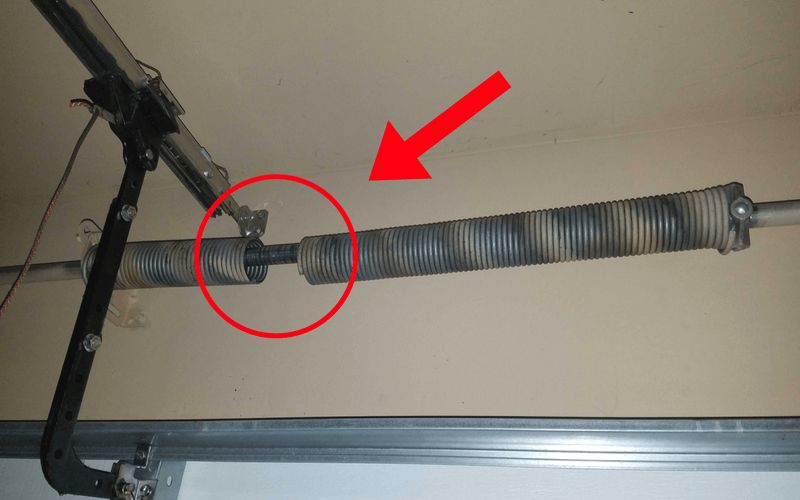
A broken garage door spring is a common reason a Savannah, GA garage door suddenly feels too heavy, moves unevenly, or stops mid-cycle. Coastal humidity, salt air, and frequent daily use can accelerate wear and strain the spring.
This guide explains what causes spring failure, what it can trigger across your door system, and what not to do after a break. When the issue is confirmed, professional garage door spring repair helps restore safe door balance and reduce the risk of additional damage.
Can a Broken Garage Door Spring Be Dangerous in Savannah, GA?
A broken garage door spring can pose a serious injury risk because the door’s weight is no longer properly supported, making movement unstable and increasing safety risks during normal operation.
Common safety risks tied to spring failure include:
- Sudden heavy lifting pressure on the system when counterbalance support is lost.
- Crooked travel that increases strain on cables, drums, and tracks.
- Garage door opener overloads when the motor tries to move an unbalanced door.
- Using an emergency release cord can lead to a hard-to-control drop if the door is already unstable.
- Higher chance of further damage when slack or uneven tension develops across lift parts.
These safety risks are directly related to the local hazards and warning signs described in our blog on How Dangerous Is a Broken Garage Door Spring in Savannah, GA?, which explains why spring failure should be treated as an urgent safety issue.
The Most Common Causes of a Broken Garage Door Spring
Cycle Wear From Daily Garage Door Use
Cycle fatigue builds over time when the door opens and closes repeatedly, and Savannah’s routines like commuting, school runs, and errands can shorten spring life faster than many homeowners expect.
Daily-use patterns that speed up fatigue include:
- Frequent trips that add more lift cycles than expected
- Short open-close bursts that increase repeated coil stress
- Busy household schedules that raise the total cycle count
- Rough travel that increases strain during each lift
- Years of use weaken steel until failure happens
According to Clopay, most garage door spring systems are rated for about 10,000 cycles and weaken under repeated tension, and heavy daily use increases fatigue and shortens spring life.
Rust and Corrosion From Coastal Humidity and Salt Air
Coastal humidity and salt exposure around Savannah can accelerate corrosion of metal parts, roughen spring surfaces, and weaken steel, increasing the likelihood of cracking under load.
Environmental conditions that often increase corrosion include:
- Moist air lingering in enclosed garages with limited airflow
- Salt carried inland, settling on exposed metal surfaces
- Surface rust is creating pitting and weak points in coils
- Damp seasonal swings that prevent metal from drying fully
- Long-term exposure reduces spring flexibility and strength
Corrosion-driven weakening tends to reduce spring reliability over time and can contribute to sudden breakage under normal door operation.
Door Weight Changes That Increase Spring Load
Spring systems are built around door weight, so upgrades or material changes that increase overall load can push springs to work harder on every cycle and wear out sooner.
Weight-related changes that commonly raise spring strain include:
- Insulation additions that increase the total door mass
- Wood doors absorb moisture and get heavier over time
- Decorative hardware adds load beyond the original setup
- Wider doors need more lift support across the span
- Panel repairs changing balance and load distribution
When a heavier door starts to overload the spring system, a garage door repair evaluation can confirm whether the door lifts evenly and whether the setup is adding strain that could lead to early failure.
Incorrect Spring Size or Mismatched Spring Pair
Incorrect sizing or mismatched springs can cause uneven lift and constant overload, increasing the likelihood of early failure, even when operation seems normal at first.
Sizing and pairing problems commonly show up as:
- Wrong wire size or length for the door’s true weight
- Mismatched spring pair causing one side to carry more load
- Capacity mismatch leading to ongoing stress buildup
- Uneven cable tension that twists the door during travel
- Repeat failure risk because the load problem remains
Sizing errors keep the system under strain, increasing the risk of spring failure during everyday use.
Door Balance Problems That Overwork the Spring
Balance problems force the spring to compensate for resistance and uneven travel, increasing mechanical stress and accelerating fatigue in the coil.
Signs of imbalance-related strain often include:
- Track alignment issues, creating binding or drag
- Roller wear increasing friction across the travel path
- Hinge wear, shifting load, and changing movement geometry
- Door sections are sagging and creating uneven travel pressure
- Cable issues are pulling unevenly and stressing the lift path
Imbalance adds continuous strain during operation, which can turn gradual wear into a sudden spring break.
Worn Hardware That Transfers Strain Into the Spring
Worn supporting parts can shift strain onto the spring, as the system must continuously fight extra resistance that the spring was never meant to absorb.
Hardware wear that frequently increases spring load includes:
- Bearing wear adds shaft resistance and drag
- Drum wear is affecting cable wrap and tension consistency
- Cable wear changing load distribution across both sides
- Loose brackets create vibration and shock during movement
- Roller wear increases friction and lift effort
Roller drag and bearing friction often build slowly, so garage door maintenance helps reduce resistance and slow the wear that can push springs toward breakdown.
Age-Related Metal Fatigue and Stress Cracking
Metal fatigue can develop even without heavy rust, as repeated stretching and contraction create microcracks that grow until the coil fails under normal load.
Fatigue progression often follows patterns like:
- Micro-cracks forming in high-stress sections of the coil
- Gradual loss of elasticity, reducing lifting support
- Increasing brittleness that makes failure more sudden
- Hairline damage stays hidden until the break occurs
- A sudden snap that can sound like a loud bang in the garage
Clopay explains that garage door springs counterbalance the door’s weight and remain under constant tension, and prolonged stress can lead to cracking, brittleness, and sudden failure.
Prior Work That Did Not Correct the Underlying Load Issue
Repeat spring failures often follow earlier service that handled the symptom but left the root cause, such as incorrect sizing, imbalance, or worn supporting parts.
Root-cause issues that can remain after past work include:
- Sizing mismatches keep tension levels incorrect
- Balance issues are still forcing uneven travel and strain
- Hardware wear continues to add friction and resistance
- Mixed parts that do not match the door’s load needs
- Limited system evaluation mis issing compounding strain factors
Past work that skips root-cause correction can leave the system stressed and raise the likelihood of another spring failure sooner than expected.

How a Broken Garage Door Spring Affects Door Balance and Operation
A broken garage door spring removes the counterbalance that helps the door move smoothly, so operation can turn unstable and place extra strain on the garage door system.
Key ways spring failure affects door balance and operation include:
- Door travel can turn uneven or crooked when counterbalance support fails.
- Door weight can feel heavier, raising drop risk and safety concerns.
- Opener effort can spike, triggering reversals and added strain.
- Cables and drums can lose tension, leading to slippage or misalignment.
- Travel can become jerky and noisy, especially at the start or end.
- Movement can stop mid-cycle as resistance rises under abnormal load.
- Rollers, hinges, and tracks can wear faster without balanced force.
- Failure often requires immediate attention because safe travel has not been confirmed.
Loss of counterbalance changes how the door carries load, so professional service helps restore stable movement and reduce repeated broken garage door spring problems.
What Breaks or Strains After the Spring Fails
Spring failure can shift the load to other parts of the garage door system, increasing the risk of damage when the door continues to operate without proper counterbalance support.
- Lift cables can lose tension or shift, leading to uneven travel.
- Drums can slip or pull unevenly, throwing off alignment.
- Rollers can wear faster when the door drags or travels crooked.
- Tracks can take side load, causing binding and rough movement.
- Hinges can loosen sooner as panels move under uneven force.
- The garage door opener can overload, causing reversals or stalling.
- Bearings can add friction, increasing noise and drag.
- Door sections can flex or shift, especially on heavier or older doors.
Unstable travel, sudden drops, or a door that will not move normally should be treated as urgent, and emergency garage door service addresses the immediate mechanical risk before damage spreads.
When to Consider Garage Door Spring Repair vs Replacement
Garage door spring repair and replacement address different levels of wear and failure, so the right choice depends on spring condition, door balance, and the likelihood of repeat problems.
|
Comparison Point |
Garage Door Spring Repair |
Garage Door Spring Replacement |
|
Best fit when |
The issue is limited, and the spring setup is otherwise correct |
Spring is broken, heavily worn, corroded, mismatched, or near the end of its service life |
|
What it addresses |
Specific performance or setup problems without a full spring swap |
Restores correct lift support with a properly sized spring or matched pair |
|
Reliability |
Effective if the root cause is isolated and corrected |
Stronger long-term stability when wear or damage is advanced |
|
Risk of repeat issues |
Higher if load or balance issues remain |
Lower when proper sizing and system condition are confirmed |
|
System impact |
Improves function but may not reset the full spring life |
Reduces strain on opener, cables, and hardware |
|
Cost considerations |
Average cost may depend on door size, labor complexity, and system condition |
Average cost may depend on spring type, number of springs, door weight, and local labor rates |
A professional evaluation helps confirm which option restores a safe balance and reduces the risk of a broken garage door spring.
What Not to Do When a Garage Door Spring Breaks
When a broken garage door spring happens, the biggest problems usually come from actions that add extra strain, create safety risks, or push the system to operate without proper counterbalance.
Actions to avoid after spring break include:
- Forcing the door up or down, since heavy lifting without spring support can lead to serious injury
- Repeatedly running the garage door opener when the door feels stuck or uneven
- Pulling the emergency release cord while the door is unstable or partially open
- Standing in the door’s path or allowing kids or pets near the opening
- Attempting spring work without the right tools and professional help
- Ignoring signs of wear like crooked travel, grinding noise, or a loud bang
- Continuing normal use after a broken garage door spring event can increase repair costs and further damage
Forced movement, repeated opener attempts, and risky release use are exactly the unsafe responses covered in our blog on Signs of a Broken Garage Door Spring (And What Not to Do), which explains why those mistakes often turn a simple failure into major problems.
How Professionals Confirm the Cause and Prevent Repeat Breaks
Professionals confirm the real cause of a broken garage door spring by checking spring sizing, door balance, and related wear points that can create repeated strain across the garage door system.
Checks that help confirm the cause and reduce repeat failures include:
- Identifying the type of spring and matching the spring type to the type of door
- Measuring the door’s weight and confirming the lift support matches the weight of the door
- Checking the number of springs against the size of the door
- Inspecting cables, drums, and safety cables for wear and uneven tension
- Reviewing track, rollers, and hinges for resistance and major problems
- Evaluating opener strain and how the garage door opener reacts under load
- Checking older doors and prior service issues for potential problems
- Confirming the hardware condition to reduce further damage and protect the life of your garage door
To understand how spring sizing, door balance, and opener response point specifically relate to spring failure, read our blog on How to Know if a Broken Garage Door Spring Is the Issue?, as this explains the signs professionals use to confirm the cause.

Get Expert Help After a Broken Garage Door Spring in Savannah
A broken garage door spring in Savannah is often linked to cycle fatigue, coastal moisture, changes in door weight, or mismatched spring sizing that increases strain over time. Once failure happens, the door can lose safe balance and place added stress on other parts, so prompt service helps limit further damage.
Elite Overhead Garage Doors supports homeowners in Savannah, GA, with spring service that restores proper lift support, improves door stability, and helps extend the life of your garage door. For professional help with a broken garage door spring, contact us or give us a call today to identify the cause and restore reliable operation.