


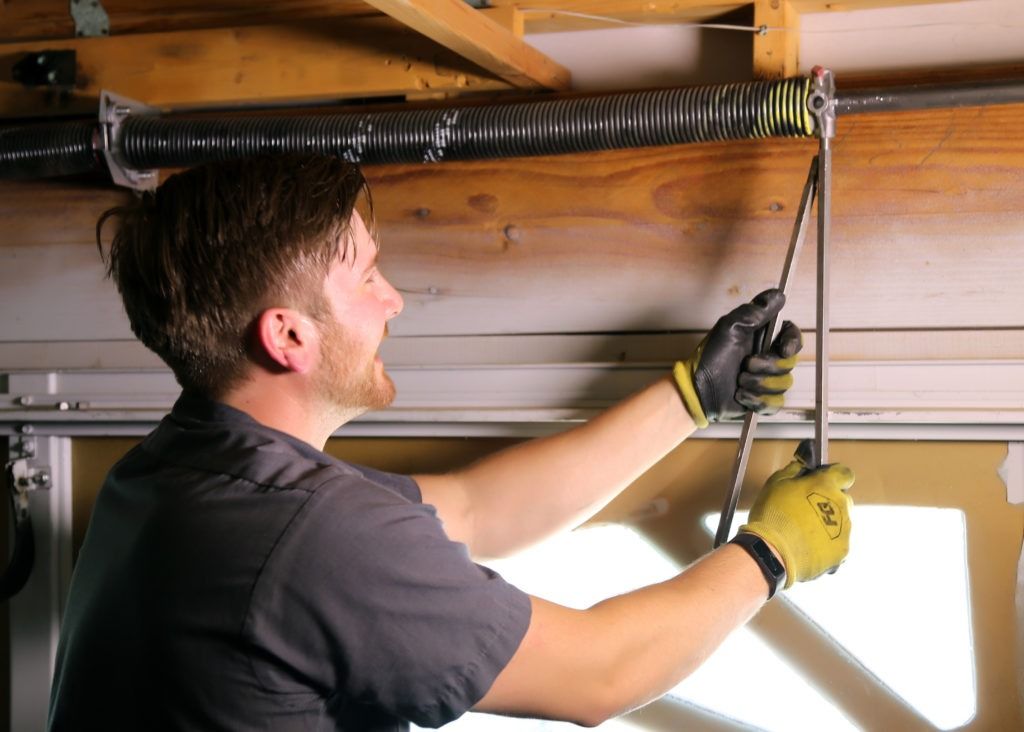
A garage door spring helps balance a heavy garage door, allowing it to open and close smoothly. When the spring fails, the door’s weight can shift suddenly, raising the risk of fast drops, opener strain, and damaged hardware around the garage opening.
In Savannah, GA, coastal humidity and corrosion can accelerate the weakening of spring coils, increasing the risk of sudden failure. Understanding these safety risks and scheduling professional garage door spring repair can help prevent injury, limit further damage, and protect the full garage door system.
Can a Broken Garage Door Spring Put Your Home at Risk?
When a spring fails, the door can lose counterbalance and shift its weight onto cables, tracks, and the garage door opener, which can make movement unstable, increase safety risks near the opening, and lead to further damage across the garage door system in Savannah, GA.
Common safety problems tied to spring failure include:
- The door feels unusually heavy and may drop faster than expected during closing.
- One side lifts higher than the other, which can cause the door to pull crooked in the tracks.
- Cables can lose tension and slip, leading to binding and jerky travel.
- The opener strains against the load and may stop, reverse, or wear out prematurely.
- Worn hardware can degrade rapidly when the system is unbalanced.
These risks show why warning indicators and unsafe actions matter, so read our blog on Signs of a Broken Garage Door Spring (And What Not to Do) to learn how to confirm spring failure and why forcing the door to operate can increase the risk of damage and injury.
Dangers of a Broken Spring During Door Movement
Sudden Door Drop and Crush Risk
Spring failure can remove the counterbalance that controls descent, causing the door to drop without warning and creating a crush hazard near the floor, the opening, or any entry path.
Situations that raise the risk of dropping include:
- A partially open door is sliding downward instead of staying in place.
- Closing speed increases near the last portion of travel.
- Floor contact is turning into a hard slam rather than a soft close.
- Stopping points change from cycle to cycle with no clear pattern.
- Foot traffic moving under the door during unstable travel.
Unstable descent is a safety issue that requires immediate attention, especially in Savannah, where corrosion can weaken supporting parts more quickly and increase the chance of sudden drops that cause serious injury near the opening.

Spring Tension Release and Impact Risk
Springs operate under high tension, so a break can abruptly release stored energy, causing impact damage to nearby hardware or serious injury if anyone is in the area.
Warning indicators linked to tension release include:
- A loud bang is coming from above the door or near the side track area.
- A visible gap in a torsion coil after the failure event.
- Center or end hardware shifting out of alignment shortly after the snap.
- Vibration or shaking at start-up because the lift support is no longer even.
- A second failure risk rises if the remaining spring is already worn.
Chamberlain provides balance-test guidance and warns that an unbalanced door can move unpredictably, and that spring- and cable-hardware systems are under extreme tension and require a trained technician.
Cable Slip and Loss of Lift Control
A spring failure can change how load is shared across drums and lift cables, creating uneven tension that pulls the door out of alignment and increases the risk of binding in the tracks.
Clues that lift control is unstable include:
- One side rises faster, while the other lags behind.
- Slack cable vis isible near a top corner or along the drum.
- Movement shifts from smooth to jerky as the door starts to lift.
- Track rubbing on one side as the door travels upward or downward.
- Sudden stops that happen at the same spot in travel.
Lift instability at the drum and cable level should be corrected before track wear spreads, and that type of system correction falls under garage door repairs, where cable alignment and lift balance are addressed directly.
Opener Overload and Motor Damage
A garage door opener is designed to move a balanced door, so a spring break can overload the motor and drive system as the opener attempts heavy lifting that the spring normally handles.
Overload patterns that often show up include:
- The motor is humming while the door barely lifts off the floor.
- Quick reversal during opening as resistance spikes.
- Trolley travel is happening without matching door movement.
- Grinding or clicking noises developing near the opener head or rail.
- Slower motion that worsens with repeated cycle attempts.
Clopay explains why a garage door gets stuck, and that springs handle most of the heavy lifting, so when one snaps, the door can become too heavy for the garage door opener to move safely.
Crooked Travel That Damages Tracks and Rollers
Loss of balanced lift can force rollers to ride incorrectly in the tracks, bend track sections, wear rollers more quickly, and cause repeat binding during everyday door movement.
Track-and-roller stress often appears as:
- Door sections are leaning to one side during opening.
- Roller chatter replaces a smooth rolling sound.
- Fresh scrape marks are forming along the inside of a track.
- Shaking near the top curve, where alignment is most sensitive.
- Uneven gapsare showing between the door edge and the jamb.
Repeated crooked travel places uneven pressure on rollers and track walls, which is why alignment-focused inspections are included in garage door maintenance service to help reduce long-term wear on hardware.
When a Broken Garage Door Spring Is an Emergency
A broken garage door spring becomes an emergency when the door turns unstable or too heavy to control, increasing the risk of sudden drops, cable slip, and opener strain.
Key emergency warning signs include:
- The door feels unusually heavy or will not open more than a few inches.
- The door moves crookedly, jerks, or looks uneven during travel.
- The opener runs, but the door barely moves or reverses under load.
- A visible gap appears in a torsion spring or a cable that looks loose near a top corner.
- The door drops faster than normal or slams when closing.
- Grinding, popping, or strain sounds begin during operation.
- The door gets stuck halfway, leaving the opening unsecured.
Any of these warning signs can signal unsafe door travel, so read our blog on How to Know if a Broken Garage Door Spring Is the Issue? to see how professionals confirm spring failure and rule out other causes.

Signs a Garage Door Spring Broken Problem Is Getting Worse
A broken garage door spring can worsen as added strain spreads to the cables, tracks, and the opener, making door movement less stable and more dangerous.
Escalation signs that commonly show up include:
- A loud bang followed by the door failing to open normally.
- Stop-and-reverse behavior during closing attempts.
- New grinding, popping, or strain sounds during travel.
- Uneven door movement that leans or lifts crookedly.
- Slower operation that feels rough, shaky, or inconsistent.
- Loose cables or visible changes near the spring and drum area.
- Increasing resistance that makes the opener work harder each cycle.
Increased opener strain can quickly wear internal components, and situations like this often require emergency garage door service to stabilize the door and help prevent more serious mechanical damage.
Savannah Factors That Can Worsen Spring Wear
Savannah conditions can accelerate spring wear by increasing corrosion and cycle fatigue, which can shorten spring life and increase the risk of a sudden breakage of a garage door spring.
Local factors that commonly worsen spring wear include:
- High humidity promotes rust and weakens coils over time.
- Salt air exposure accelerates corrosion on springs and hardware.
- Temperature swings that change how metal responds under load.
- Frequent daily use increases the number of cycles the spring must handle.
- Heavier doors increase stress on the spring during each lift.
- Older hardware that already shows signs of wear and uneven movement.
Wear factors vary by property and door setup, so read our blog on What Causes a Broken Garage Door Spring in Savannah? to understand the most common failure drivers and how professionals evaluate spring condition.
What Happens During Garage Door Spring Repair
Garage door spring repair focuses on restoring safe, balanced door movement by matching the spring type to the door’s weight and checking related hardware for strain, wear, and alignment issues.
Service steps commonly included in professional work are:
- Confirming the spring type and the type of garage door spring used on the system.
- Verifying the door’s weight, size of the door, and type of door to ensure correct lift support.
- Inspecting lift cables, drums, bearings, and safety cables for signs of wear or damage.
- Checking track alignment and roller condition to prevent crooked travel and binding.
- Testing the emergency release cord and verifying the garage door opener is not overloaded.
- Running multiple open-and-close cycles to confirm the balance of the door and controlled travel.
- Reviewing garage door maintenance needs to reduce future spring repair costs and prevent major problems.
Professional service restores stable operation and helps reduce safety risks, further damage, and unplanned garage door repair costs across the full garage door system.
What to Expect During Garage Door Spring Replacement
Garage door spring replacement typically includes removing the failed spring, installing a correctly sized spring for the door’s weight and spring type, and testing the system so the door moves safely and stays balanced.
What homeowners can expect during the service visit includes:
- A door inspection to confirm the type of spring and the type of garage door spring installed.
- Door weight and size checks so the new spring matches the door’s weight and the number of springs needed.
- Spring replacement using the right tools to manage high tension safely.
- Cable, drum, and safety cables inspection to help prevent further damage.
- Balance testing to confirm the door lifts evenly and lowers under control.
- Opener testing to confirm the garage door opener does not strain or reverse.
A complete spring replacement visit should end with smooth travel, a stable door balance, and a safer system that supports peace of mind.
Choosing a Spring Service Provider in Savannah
Choosing a spring service provider matters because spring work involves high-tension parts, and improper handling, sizing, or testing can increase safety risks and cause further damage throughout the garage door system.
Key factors to evaluate when selecting a provider include:
- Confirming the company services your type of spring and type of garage door spring.
- Checking experience with both torsion spring and extension spring setups.
- Asking if the visit includes door balance testing and full travel verification.
- Verifying the team uses the right tools for high-tension spring work.
- Ensuring cables, drums, bearings, and safety cables are inspected for signs of wear.
- Reviewing warranty coverage and documentation for spring replacement and repairs.
- Confirming availability for urgent situations when the door becomes unsafe to operate.
Reliable service starts with clear safety checks and proper sizing, so when searching for a broken garage door spring near me, prioritize providers who confirm the door weight, test the door’s balance, and complete final safety verification before leaving.
Reliable Spring Safety Support in Savannah, GA
A spring failure can make the door dangerously heavy, cause uneven travel, and overload connected parts, increasing safety risks and the risk of further damage to the garage door system. Fast service after the first signs of failure helps protect property, reduce opener strain, and restore stable door movement.
Elite Overhead Garage Doors provides spring service in Savannah, GA, with safety-focused inspections, proper sizing, and full-system testing for reliable operation. When the door feels heavy, shakes, or will not lift normally, contact us or give us a call today to book a spring safety inspection with a clear service plan.